High-hardness cast iron is one of the typical difficult-to-machine materials. As automotive braking systems, mining machinery, metallurgical equipment, engineering machinery, pumps and valves, and high-wear-resistant components continue to develop toward higher strength, higher wear resistance, and longer service life, the hardness and wear resistance of cast iron materials have been continuously increased. This has also made traditional cemented carbide and ceramic tools face growing challenges in terms of machining efficiency, tool life, and machining stability.
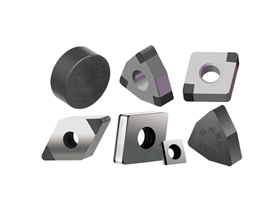
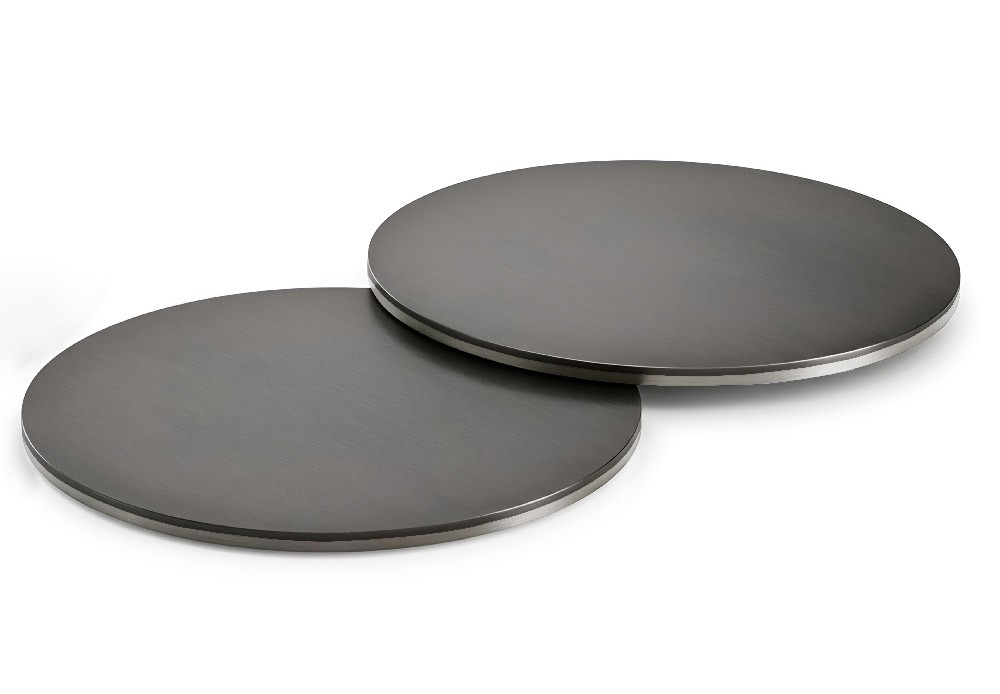
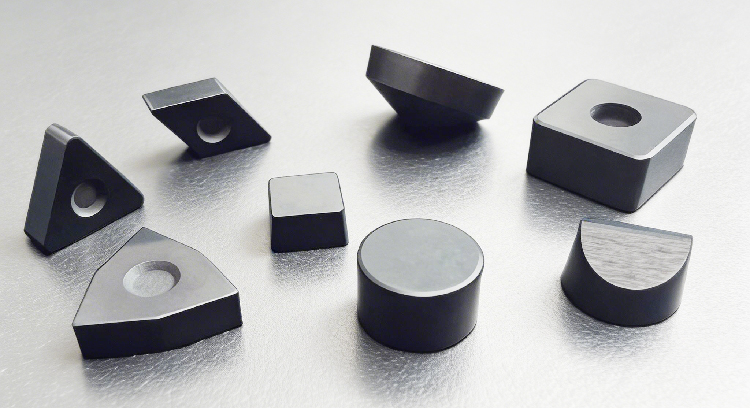
CBN (cubic boron nitride) inserts, their high hardness, high wear resistance, good high-temperature performance, and favorable chemical stability towards iron-based materials, have become an important tooling solution for high-hardness cast iron machining. Currently, Berlt CBN tools have been widely applied in high-speed machining of gray cast iron, ductile iron, sintered materials, and other cast irons.
I. What is high-hardness cast iron? Why is it more difficult to machine than ordinary cast iron?
Cast iron is not a single material. Depending on the matrix structure, graphite morphology, alloying elements, and casting and heat treatment conditions, various materials can be encountered in actual production, including gray cast iron, ductile iron, vermicular graphite cast iron, alloy cast iron, high-chromium cast iron, chilled cast iron, and wear-resistant cast iron.
Among these, some cast irons that have undergone alloying, chilling, or special heat treatment possess higher hardness and significantly enhanced wear resistance, exhibiting machining characteristics in actual cutting that are distinctly different from those of ordinary gray cast iron.
For example, high-chromium cast iron, chilled cast iron, and some high-hardness wear-resistant cast irons often feature high hardness, high wear resistance, and a relatively high content of hard phases in the microstructure. This means that during the cutting process, the tool not only has to withstand high mechanical loads but also has to endure severe abrasive wear over extended periods.
II. Where exactly do the difficulties lie in machining high-hardness cast iron?
1.High hardness leads to accelerated tool wear. High hardness is the most direct machining difficulty of high-hardness cast iron. When the workpiece hardness increases, the cutting edge of the tool must bear higher cutting stresses. Although conventional cemented carbide tools have good overall performance, their wear resistance is often limited in high-hardness, severe abrasive wear environments. This often results in a sharp decline in tool life, reduced machining efficiency, and even unstable machining processes.
2.Hard phases in the cast iron microstructure exacerbate abrasive wear. The machining difficulty of high-hardness cast iron comes not only from macroscopic hardness but also from the material's microstructure. Different cast irons may contain pearlite, carbides, and other hard phases. When the cutting edge continuously passes through these hard phases, significant abrasive wear occurs.
3.Cast iron machining tends to create unstable cutting loads. When the material microstructure changes, or when there are casting defects, hard spots, uneven machining allowances, or interrupted cutting conditions in the workpiece, the load on the tool will fluctuate considerably. Especially in cases such as: casting skin not completely removed, uneven machining allowance, hard spots in the workpiece, casting defects, and heavy-depth roughing, the insert must not only be "wear-resistant" but also possess sufficient chipping resistance and impact resistance.
III. Why are CBN tools suitable for high-hardness cast iron machining?
CBN tools are not suitable for high-hardness cast iron machining solely because of "hardness." Their true advantage comes from a combination of multiple properties.
·High hardness: resists severe abrasive wear. High hardness enables CBN tools to maintain good edge integrity and wear resistance during machining of high-hardness, highly abrasive materials.
·High wear resistance: extends continuous machining life. For mass-produced cast iron parts such as automotive brake discs, brake drums, flywheels, cast iron housings, and others, machining efficiency depends not only on single-pass cutting speed but also on how long the tool can maintain stable machining. CBN's high wear resistance makes it particularly suitable for cast iron machining scenarios that require high tool life and dimensional stability.
·Good thermal stability: suitable for high-speed machining. CBN has good high-temperature performance and thermal conductivity, allowing it to leverage its material advantages under high-speed cutting conditions. Therefore, CBN has become an important tool material for high-speed turning, boring, and some high-speed milling of cast iron.
·Compatibility with iron-based materials. Compared to diamond, CBN is more suitable for machining iron-based materials such as steel and cast iron. This is also one of the important reasons why CBN and PCD have formed clearly distinct application fields.
IV. For high-hardness cast iron machining, how should CBN, cemented carbide, and ceramics be selected?
Tool material selection cannot be simply understood as "choose whichever is harder."
Cemented carbide inserts: advantages include good toughness, wide application range, and relatively low tool cost. However, in high-hardness, highly abrasive cast iron machining, wear resistance and machining efficiency may be limited.
Ceramic inserts: ceramics have good heat resistance and are competitive in some high-speed cast iron machining applications. However, their impact resistance and chipping resistance generally need to be carefully evaluated based on specific working conditions.
PCBN inserts: CBN offers extremely high hardness and wear resistance, with clear advantages in high-hardness cast iron, high-speed cast iron machining, and high-precision, mass-production machining. When workpiece hardness, wear resistance, machining accuracy, tool life, and production cycle reach certain levels, the overall machining value of PCBN becomes increasingly prominent.