In the field of machining, the cutting of hardened steel workpieces has long been an industry pain point. When workpiece hardness reaches HRC 60 or above, the difficulty of machining increases exponentially. Facing stringent dimensional tolerances and surface finish requirements, conventional carbide tools are highly prone to rapid wear and edge chipping. This not only demands constant operator supervision but also makes it difficult to maintain consistent machining quality.
For a long time, the industry has commonly adopted a traditional process route of annealing, rough turning, hardening, and grinding. While this approach can complete the machining task, it involves cumbersome procedures, extended turnaround times, and persistently high costs in labor, equipment, and energy consumption. Therefore, achieving direct hard turning of hardened steel to replace grinding operations has become a core requirement for improving efficiency and reducing costs.
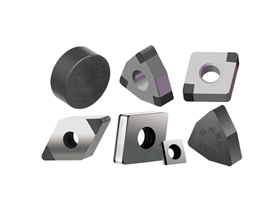
For hardened steel with hardness exceeding HRC 60, Cubic Boron Nitride (CBN) inserts have emerged as a mature, efficient, and preferred tooling solution. The following analysis integrates practical machining scenarios to explain their application value and key operational points.
I. Core Machining Challenges in Hardened Steel Turning
The high hardness of hardened steel is merely the surface-level challenge. A series of issues arising during the cutting process are the key factors leading to conventional tool failure and machining disruptions:
Cutting Heat Accumulation: Hardened steel possesses a very low thermal conductivity coefficient. Heat generated during cutting cannot dissipate quickly and becomes highly concentrated in the cutting edge area. High temperatures cause the binder phase of carbide tools to soften, accelerating tool wear. Simultaneously, this induces secondary hardening of the workpiece surface, creating a vicious cycle of "the harder it gets, the harder it cuts."
Vibration and Impact Effects: Cutting high-hardness workpieces requires substantial cutting loads. If the workpiece clamping rigidity is insufficient or if interrupted cutting surfaces (such as keyways or oil holes) are present, vibration is highly likely to occur. Vibration directly leads to edge chipping of the tool, the appearance of chatter marks on the workpiece surface, and failure to meet dimensional accuracy and surface quality standards.
Chip Control Issues: Chips formed during hardened steel cutting are predominantly powdery or saw-toothed. Their scattering increases cleaning difficulty and poses safety risks. In automated production lines, they can easily cause chip entanglement and machine downtime, affecting production continuity.
The combination of these difficulties results in low efficiency and high tooling costs in traditional hardened steel machining, creating a bottleneck in production.
II. Core Advantages of CBN Inserts in Machining High-Hardness Hardened Steel
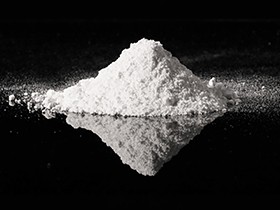
CBN (Cubic Boron Nitride), as a superhard tool material, ranks second only to diamond in hardness. It also possesses excellent thermal stability and chemical inertness, making it perfectly suited for the demands of hardened steel hard turning:
High-Temperature Resistance and Hardness Retention: In high-temperature cutting environments, CBN inserts maintain extremely high hardness without softening or failure. They also avoid the high-temperature chemical reaction issues that diamond tools experience with ferrous materials, making them an ideal material for hardened steel machining.
Enabling "Turning Instead of Grinding": For continuous cutting applications such as external diameters and end faces of hardened steel, suitable CBN inserts can achieve cutting speeds of 100–150 m/min. Combined with reasonable feed parameters, they can consistently achieve surface roughness values below Ra 0.8, directly replacing semi-finish and finish grinding operations and significantly simplifying the process flow.
Stable and Efficient Tool Life: Taking the machining of HRC 62 bearing steel as an example, coated carbide tools may require insert changes after just a few workpieces, whereas CBN inserts can machine dozens of workpieces consecutively. The frequency of tool changes is greatly reduced, minimizing machine downtime and enhancing machining efficiency.
Excellent Machining Consistency: CBN inserts exhibit a slow wear rate, ensuring exceptional retention of workpiece dimensional accuracy. The dimensional deviation between the first part and the hundredth part is minimal, fully meeting the production requirements of high-volume, high-precision components such as automotive parts and hydraulic elements.
III. Practical Application Tips for CBN Inserts On-Site
While CBN inserts offer outstanding performance, they must be selected and used appropriately based on working conditions to maximize their effectiveness. Drawing from frontline machining experience, the key points are as follows:
Cutting and Cooling Selection: Dry cutting is recommended for most hardened steel hard turning scenarios. The cutting heat can moderately soften the workpiece surface layer, reducing cutting resistance. If coolant is necessary, it must be applied continuously and in sufficient volume to prevent thermal cracking of the insert caused by intermittent thermal shock.
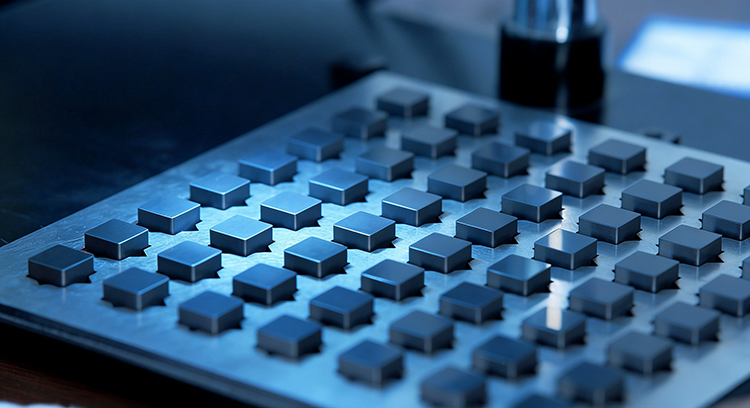
Adaptation to Interrupted Cutting: For interrupted cutting conditions involving keyways, holes, etc., high-impact-resistant CBN grades should be selected. The cutting edge should also be honed or chamfered to enhance edge strength. Solid polycrystalline CBN inserts offer excellent impact resistance and are suitable for conventional interrupted cutting scenarios.
Machine Tool Rigidity Requirements: CBN inserts are sensitive to micro-chipping. It is essential to ensure minimal spindle runout and secure workpiece clamping. Insufficient machine rigidity will directly impact tool life and machining quality, preventing the full potential of superhard tools from being realized.
IV. Cost and Application Value Summary
Regarding unit cost, CBN inserts are priced higher than standard carbide tools. However, when comprehensively accounting for hidden costs such as grinding labor hours, grinding wheel consumption, tool change downtime, and process handling—especially in high-volume production or high-value-added workpiece machining—the overall cost-effectiveness of CBN inserts is significantly superior.
As a service provider focused on the R&D and production of superhard cutting tools, Bote has witnessed countless practical cases where optimized tool selection has doubled efficiency, and we also understand the machining challenges caused by improper selection. If you are currently facing difficulties in hardened steel hard turning, it is recommended to verify the machining performance of CBN inserts through actual trial cutting.