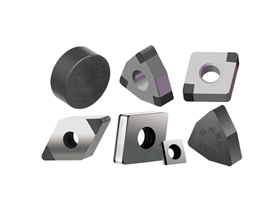
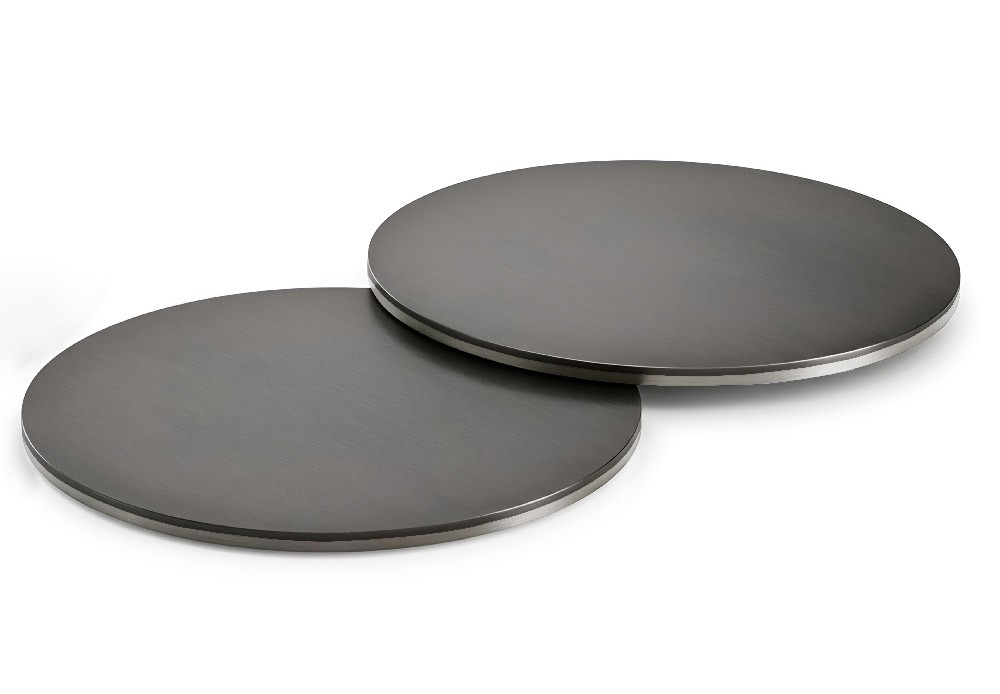
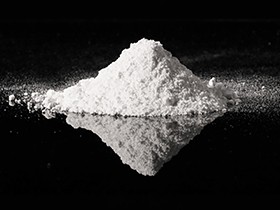
In the manufacturing process of PCBN (polycrystalline cubic boron nitride) inserts, people usually pay more attention to factors such as CBN content, binder system, sintering process, and insert structural design.
However, from a materials science perspective, one of the key factors determining the upper limit of PCBN insert performance is precisely the CBN micropowder at the upstream end of the industrial chain.
CBN micropowder is not only the core constituent material of PCBN cutting tool materials, but also an important foundation that determines their microstructure and ultimate cutting performance. Parameters such as micropowder particle size, purity, crystal strength, particle size distribution, and thermal stability directly affect the sintering quality of PCBN composites, and further influence the insert's wear resistance, chipping resistance, machining accuracy, and service life.
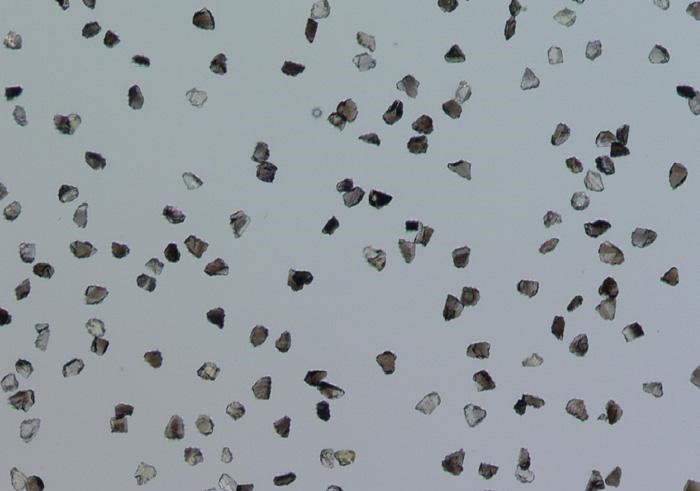
CBN micropowder is the foundation for the formation of PCBN inserts performance
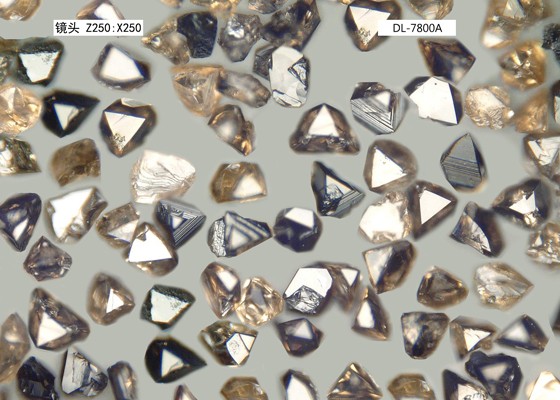
CBN is currently the superhard material second only to diamond in hardness. Through processes such as crushing, shaping, purification, and classification, CBN micropowders of different specifications can be produced and are widely used in PCBN inserts, superhard abrasives, precision lapping, and other fields.
In the PCBN insert manufacturing process, CBN micropowder constitutes the superhard phase skeleton within the material, while the binder is responsible for firmly bonding these microscopic particles together. Whether the resulting microstructure is dense, uniform, and stable depends to a large extent on the quality of the CBN micropowder itself.
Micropowder particle size directly affects the balance between wear resistance and toughness of the inserts
CBN micropowder particle size is one of the most important factors affecting PCBN performance. CBN particles of different sizes form completely different microstructures after sintering, thus exhibiting distinct cutting performance.
As market demands for comprehensive tool performance continue to rise, PCBN materials increasingly adopt multimodal particle size designs. Through scientific proportioning of different particle sizes, the packing density and microstructural uniformity of the material are improved, thereby achieving a balance between wear resistance and toughness.
Micropowder purity determines the stability and service life of the insert
In addition to particle size, the purity of CBN micropowder is also an important indicator affecting PCBN performance.
High-quality CBN micropowder typically has high CBN content and low impurity levels, ensuring the formation of a stable and uniform bonding structure during sintering. If the micropowder contains excessive residual impurity elements or non-cubic boron nitride phases, structural defects are likely to form during the high-temperature, high-pressure sintering process, affecting the bonding strength between particles.
In actual cutting processes, the cutting edge of the tool is subjected to sustained high temperatures and high stresses. Impurity areas often become the initiation points for wear, cracks, and thermal failure, leading to abnormal tool wear, chipping, or even premature failure. Therefore, high-purity CBN micropowder not only enhances the structural stability of PCBN inserts but also effectively improves tool life and machining consistency.
Crystal strength determines the chipping resistance of the insert
For PCBN inserts, each CBN microparticle actually bears microscopic cutting forces, so the strength and integrity of the CBN crystals themselves are equally critical.
High-quality CBN micropowder typically features regular and complete crystal structures, fewer internal defects, and higher compressive strength. During cutting, these high-strength grains can sustain their cutting capability, are less prone to particle fracture or detachment, and thus ensure long-term stability of insert performance.
Particle size distribution affects sintering structure and performance consistency
In PCBN insert manufacturing, the importance of particle size distribution is often overlooked. In fact, even with the same average particle size, different particle size distributions can lead to completely different sintering outcomes.
A reasonable particle size distribution improves packing efficiency between particles, resulting in a denser and more uniform sintered structure with fewer pores and defects. It also facilitates higher internal bonding strength and thermal stability of the material.
As high-end manufacturing continuously raises requirements for machining efficiency, machining accuracy, and tool life, PCBN material technology is gradually shifting from merely pursuing higher CBN content toward in-depth research on microstructure and powder engineering. Only by continuously improving CBN micropowder quality and achieving whole-process technical optimization from powder to composite compacts can we truly produce high-performance PCBN cutting tools that combine high wear resistance, high reliability, and long service life, providing more stable and efficient cutting solutions for modern precision manufacturing.