As industries such as automotive manufacturing, rail transportation, wind power equipment, engineering machinery, bearing manufacturing, and mold processing continue to advance toward higher efficiency and greater precision, the limitations of traditional cemented carbide tools in machining high-hardness and high-wear-resistant materials have become increasingly evident.
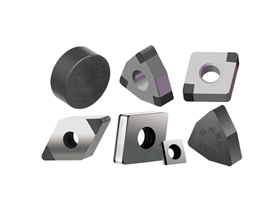
As an important representative of superhard tool materials, PCBN (polycrystalline cubic boron nitride) inserts, with their excellent wear resistance, high-temperature resistance, and chemical stability, have become a key choice in hard turning and high-efficiency cutting fields.
However, in practical applications, many users still have questions: What materials are CBN inserts truly suitable for processing? Which materials can fully leverage their performance advantages? And which materials are not suitable for CBN inserts? In this article, Berlt Tools will systematically analyze the applicable scope of PCBN inserts based on material characteristics, machining conditions, and industry applications.
Why are CBN inserts particularly suitable for high-hardness material processing?
CBN is a superhard material second only to diamond, possessing extremely high hardness, excellent stability, and good resistance to chemical wear. Compared with cemented carbide, PCBN inserts can maintain a sharp cutting edge for extended periods under high-speed and high-temperature conditions and significantly reduce tool wear rates. Therefore, they are especially suitable for machining ferrous metals with high hardness and severe abrasive wear.
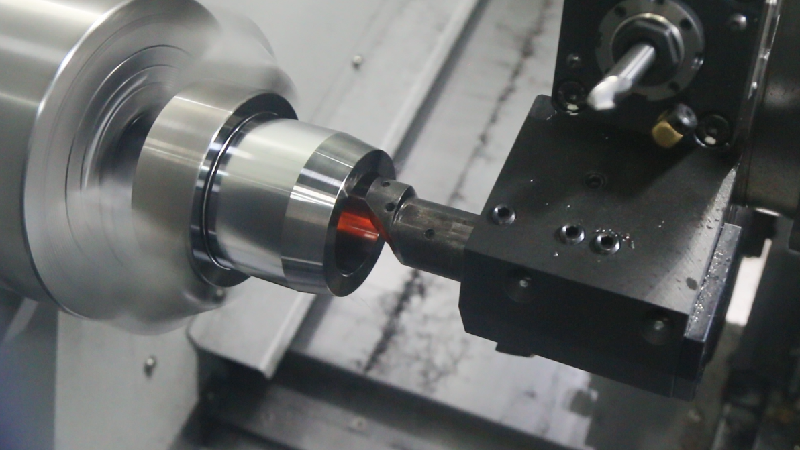
Especially in hard turning processes, PCBN inserts can replace some grinding operations and achieve one‑pass turning, which not only improves machining efficiency but also reduces manufacturing costs and equipment investment.
What materials are CBN inserts suitable for processing?
From a material classification perspective, PCBN inserts are most suitable for machining the following major categories of workpieces.
Category 1: Hardened steel (HRC45–68). Hardened steel is the most typical application object of PCBN inserts, including bearing steel, gear steel, tool steel, die steel, cold-work steel, hot-work steel, etc. For workpieces with hardness in the range of 55–68 HRC, PCBN inserts can stably complete continuous cutting and light interrupted cutting, achieving high dimensional accuracy and excellent surface quality.
Category 2: Various cast iron materials. Gray cast iron, ductile cast iron, high-chromium cast iron, and wear-resistant cast iron often contain a large number of hard particles in their structure. Conventional cemented carbide tools wear out quickly, while PCBN inserts, with their excellent wear resistance, can significantly extend tool life.
Category 3: High-hardness wear-resistant alloys and highly wear-resistant materials. Some high-chromium wear-resistant materials, sprayed coating parts, and composite wear-resistant materials have dense structures and high hard-phase content, placing extremely high demands on tool wear resistance. PCBN inserts can effectively reduce flank wear and edge chipping, improve dimensional consistency, enhance machining efficiency, and achieve stable surface roughness.
Which materials are not suitable for CBN inserts?
Although PCBN inserts have outstanding performance, they are not "universal tools." Their advantages are mainly reflected in ferrous metals and high-hardness materials, while they are not recommended for certain materials.
For example, non-ferrous metals such as aluminum alloys, copper alloys, brass, and red copper are better suited for PCD (diamond) tools; ordinary mild steel, low-hardness carbon steel, and soft steel, due to low cutting temperatures and high chip plasticity, are prone to built‑up edge formation, making it difficult to leverage the advantages of PCBN inserts. Cemented carbide tools are generally more cost‑effective for these materials.
In addition, materials such as titanium alloys and nickel‑based superalloys have special cutting mechanisms that demand higher toughness and thermal shock resistance from the tool. Dedicated tool solutions based on specific working conditions are required, rather than simply applying PCBN inserts.
How to select PCBN inserts for different industries?
At present, PCBN inserts have been widely used in many manufacturing fields. In the automotive industry, they can be used to machine brake discs, brake drums, engine blocks, cylinder heads, transmission gears, and bearing components. In the bearing manufacturing industry, they are applied to the finishing of inner rings, outer rings, and raceways. In wind power, engineering machinery, and metallurgical industries, they are widely used for large gears, rolls, wear‑resistant parts, and high‑hardness transmission components.
Different application scenarios impose different requirements on PCBN inserts. For example, continuous cutting emphasizes wear resistance, so grades with higher CBN content can be prioritized; interrupted cutting requires higher chipping resistance, so composite grades with better toughness should be selected; finishing requires a balance of edge sharpness and dimensional stability to achieve better surface quality.
Therefore, tool grade, CBN content, binder system, edge preparation, and chipbreaker design all need to match the specific working conditions to fully realize the comprehensive performance of PCBN inserts.
Conclusion: PCBN inserts are not suitable for all materials, but demonstrate irreplaceable advantages in machining high‑hardness steel, hardened steel, various cast irons, and highly wear‑resistant ferrous metals. Only by fully understanding the cutting characteristics of different materials and making scientific selections based on machining methods, workpiece structures, and production goals can the true value of PCBN inserts be realized in improving machining efficiency, extending tool life, and reducing overall manufacturing costs.