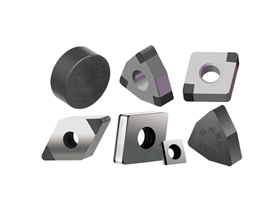
Why is it that the same CBN insert can sometimes machine 100 parts, but at other times only 60 or even fewer?
When many companies encounter this situation, their first reaction is often: "This batch of inserts is of poor quality."
But from the perspective of the actual machining process, tool life is actually the result of the combined action of the entire "tool—workpiece—machine tool—process—operation" system.
Changes in workpiece hardness, inconsistent machining allowances, variations in cutting speed, insufficient machine tool rigidity, unstable fixturing, changes in workpiece material, or even alterations in the cooling method can all cause significant fluctuations in CBN tool life.
Therefore, to solve the problem of unstable CBN tool life, one should not focus solely on the insert itself, but rather look for causes throughout the entire machining system.
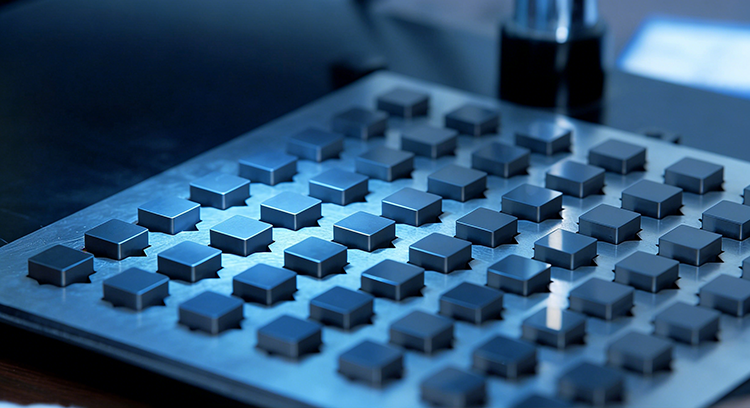
For unstable CBN tool life, the first step is to check these 8 factors:
1. Mismatch between CBN grade and workpiece material. Different CBN grades differ in CBN content, grain size, binder system, toughness, wear resistance, and impact resistance. Selecting the corresponding grade is a prerequisite for obtaining stable tool life and machining performance.
2. Unreasonable cutting parameters. This is one of the most common causes of CBN insert life fluctuations. For example, excessively high cutting speed can significantly increase the temperature and thermal load in the cutting zone, accelerating tool wear; excessive feed rate can increase cutting forces and edge impact; and excessive depth of cut may lead to increased cutting loads.
3. Changes in workpiece hardness and material structure. Workpiece materials from different batches may exhibit variations in actual material structure, alloying elements, heat treatment state, hardened layer depth, residual stress, and hardness uniformity, all of which can have a considerable impact on the machining performance of CBN tools.
4. Intermittent cutting significantly alters the stress state of CBN inserts. In intermittent cutting, the cutting edge continuously undergoes the impact cycle of "entering the material—exiting the material—re-entering." If the grade, edge preparation, cutting parameters, and machine tool rigidity are not well matched, sudden failure can easily occur.
5. Insufficient machine tool rigidity makes it difficult for CBN inserts to perform stably. If the machine tool spindle, tool shank, fixture, or the workpiece itself lack adequate rigidity, the vibrations generated during machining will continuously act on the CBN insert, subjecting the tool tip to high-frequency, repeated impacts, leading to fluctuations in insert life.
6. Changes in edge preparation. The edge chamfer, honing, edge radius, and geometric configuration of CBN inserts all affect the stress state at the tool tip. Through different edge designs, the same CBN material can exhibit completely different machining performance.
7. Unreasonable cooling methods can also cause life fluctuations. Many CBN hard-turning applications tend to prefer stable dry cutting; if coolant must be used, it should be applied continuously, adequately, and effectively directed to the cutting zone, rather than intermittently or inconsistently.
8. Consistency of the machining process. To achieve stable CBN tool life, one must first establish a stable machining process. This can be understood as: stable tool life = stable tool + stable workpiece + stable equipment + stable parameters + stable operation. Significant fluctuations in any single variable can ultimately be reflected in the final tool life.